Posts

Hengist

Image
joint-founder with his brother Horsa (d. 455) of the English kingdom of Kent, belonged to a leading family of the Jutes, settled in the peninsula of Jutland, where they held land as far south as the river Sley, which runs into the sea near Schleswig. In early traditions their ancestry is traced back to the gods. Witta, who is described as their grandfather, and, according to Beowulf, ‘ruled Sueves,’ is supposed by Sir James Simpson to be the Vetta, son of Victi, whose burial is commemorated by the inscription on the Catstane at Kirkliston, between six and seven miles from Edinburgh. The suggestion is ingenious, and it is clear from Ammianus Marcellinus that Saxons, a name that might fairly be taken to include Jutes or Angles, were in Scotland, leagued with the Picts and Scots, about 364, a date at which it is quite possible for the grandfather of Hengist to have been alive. Kemble suggested, on the other hand, that not only their ancestors, who are traced back to Teutonic d...

VORTIGERN

Image
Photo via Pinterest  though the subject of many weird legends, may safely be regarded as an historical figure, the ruler of South-eastern Britain at the time of the first English settlement. According to Gildas, the piteous appeal to Ætius in 446 was followed by a British victory over the barbarians of the north; soon, however, it was rumoured that the latter were again about to attack the province, and the Britons were in despair. It was then decided by the ‘haughty tyrant’ and his ‘counsellors’ to invite the aid of the Saxons, who came in three keels and, ‘iubente infausto tyranno,’ settled in the eastern part of the island. The Picts and Scots defeated, the newcomers turned upon the Britons and devastated the whole country. In this account, the earliest extant, of the circumstances which led to the English settlement, the name of the British ‘tyrant’ is withheld (though two of the manuscripts repair the omission), after a fashion not uncommon in Gildas. Nevertheless ...

Cuckoo

Image
The arrival of cuckoos is the signal that spring has come; various April dates are called 'Cuckoo Day' in different parts of the country: 14th in Sussex, 15th in Hampshire and Northamptonshire, 20th in Worcestershire, and so on. These are dates of local fairs, and there is often a tradition that an old woman goes to the fair and lets a cuckoo out of her bag or apron (Wright and Lones, 1936: ii. 177-8).    A good deal of light-hearted rivalry surrounds the question of when and where the first cuckoo is heard, and many letters on the topic have been published in The Times over the years. *Omens were drawn from the first call heard: lucky if to your right, unlucky if to your left or behind you, or if you have not yet eaten; if you have money in your pocket at the time, you will have plenty all year (especially if you turn it or jingle it), but if not, you will stay poor; if you are in bed, this forebodes an illness, unless you start running at once; if you are standin...

John Rous(Historian)

Image
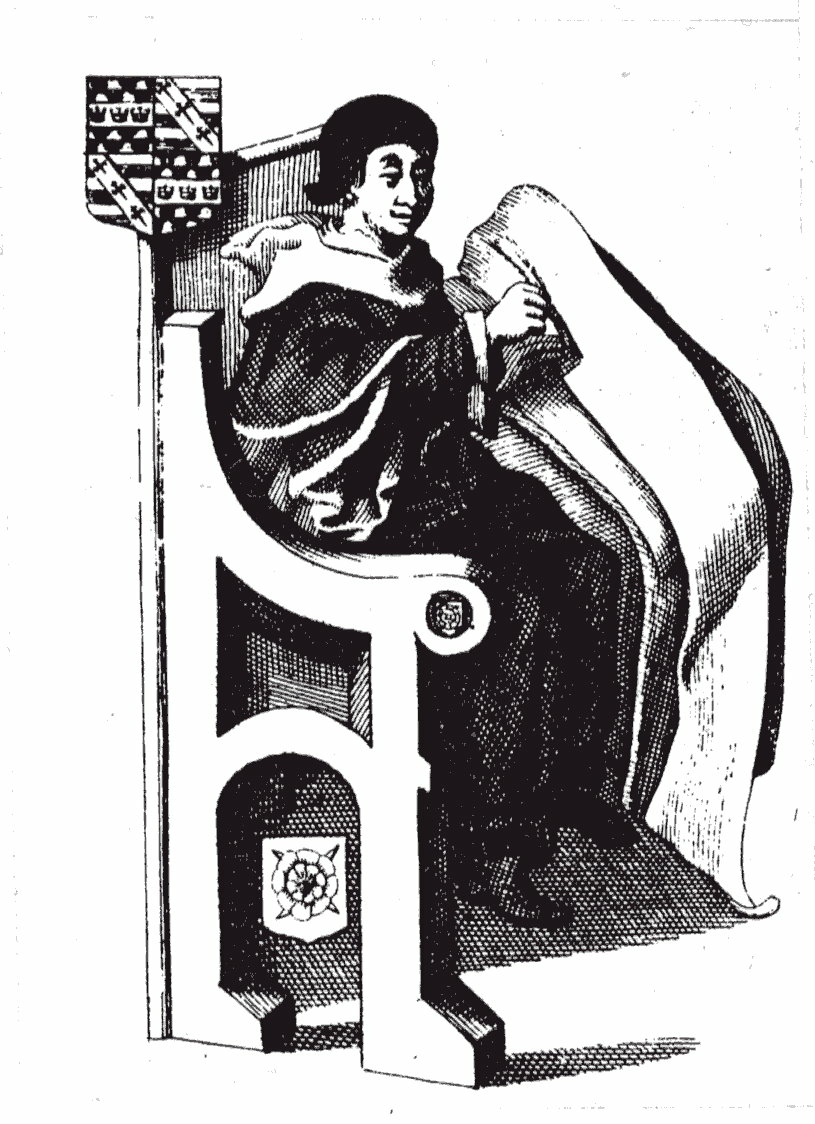
Although the accuracy and value of his historical writings and judgments have been questioned, John Rous of Warwickshire, a chantry priest with antiquarian interests, is recognized as an important source for contemporary perceptions and attitudes during the WARS OF THE ROSES.    Born at Warwick and educated at Oxford, Rous was in 1445 appointed a chaplain of the chantry chapel at Guy’s Cliff in Warwickshire. His office, which he retained for the rest of his life, required him to celebrate daily Mass for the chantry’s late founder, Richard Beauchamp, earl of Warwick. His duties allowed him time to indulge his interest in antiquarian studies, that is, to collect manuscripts and artifacts relating to the history of his locality, to conduct historical research, and to write up his findings. He undertook periodic trips— once to WALES and once to LONDON—to study local historical records and to borrow or buy research materials. In 1459, he attended the COVENTRY PARLIAMENT...

Langstrother, Sir John, Prior of the Hospital of St. John of Jerusalem

Image
War of the Roses The son of Thomas Langstrother of Crosthwaite, Sir John, like his elder brother William, joined the Knights of the Hospital of St. John of Jerusalem (also known as “the Hospitallers”), a military religious order established in the eleventh century to provide hospital care and military protection to pilgrims in Jerusalem during the Crusades. Ruled by a grand master, who by the fifteenth century was headquartered on the island of Rhodes, the order’s various national provinces were headed by grand commanders or priors. In 1467, after spending most of his early years in the eastern Mediterranean serving as castellan of Rhodes and grand commander of Cyprus, Langstrother won election as prior of the order in England, a position that had been held by Robert Botyll, a noted Yorkist. Because Langstrother’s Lancastrian sympathies were well known, EDWARD IV, in an unprecedented act, refused to sanction the Knights’ selection and suggested that they accept Richard Wood...

Buckingham Rebellion ,1483

Image
Buckingham finds the Severn impassable, 18 October 1483  © The Stapleton Collection / Bridgeman Images Buckingham’s Rebellion is the name given to a series of uprisings that occurred in England in the autumn of 1483 in reaction to RICHARD III’s seizure of his nephew’s throne, to the disappearance of that nephew and his brother, and to the growing belief that both boys were dead.    Buckingham’s Rebellion comprised two independently organized conspiracies against Richard III that, despite some incompatibilities of purpose, joined together to achieve their shared goal of overthrowing the king. The first conspiracy was planned and led by Henry STAFFORD, duke of Buckingham, heretofore Richard’s chief ally. The exact reasons for Buckingham’s desertion of the king he had helped to make are unclear. The traditional reason, used by William Shakespeare in his play RICHARD III, is the king’s refusal to keep a promise to restore to Buckingham certain lands to which he ha...

The Book of Kells

Image
Illuminated depiction of the first two letters of Christ's name in Greek, chi and rho; from the Book of Kells,  c.  800 AD. Photos.com/Thinkstock The Book of Kells is one of the most famous and magnificent illuminated manuscripts in the world. It was produced around 800 somewhere in the British Isles. The vellum manuscript contains the four Gospels, with prefaces and the “Eusebian canons”—tables containing concordances to the Gospels. The manuscript comprises 340 vellum pages, each page containing 16 to 18 lines of text in a handwriting known as “insular majuscule.” But the chief interest in the book lies in its lavish illuminations. Three elaborate full-page miniatures of the symbols for the evangelists Matthew, Mark, and John appear before the openings of those Gospels. Directly facing the opening texts of each Gospel are portraits of the four evangelists themselves. There are, in addition, full-page illuminations illustrating Christ in majesty, the Virgin and Ch...

Nennius

Image
Nennius is the traditional author of the early Latin compilation known as the ' Historia Brittonum,' which purports to give an account of British history from the time of Julius Caesar to towards the end of the 7th century A.D. In the preface he describes himself as a disciple of Elvodugus, who died in A.D. 809, with the title of ' chief bishop in the land of Gwynedd.' We may infer that Nennius held the same more cosmopolitan views of Christian practice as his master; but apart from his own disclaimer to any literary or intellectual pretensions, to which his poor latinity and total lack of any critical acumen bear ample witness, virtually nothing further is known of him. It may be that he was a native of the eastern districts of South Wales, as the internal evidence of his work indicates. It is unlikely that the ' Liber Commonei ' at Oxford (Bodl. Auct. F. 4. 32) was written by him personally, but a reference in it shows that his name and probably hi...

Seamus Heaney

Image
By:Rand Brandes In a 1989 interview on the British Desert Island Disc radio program, Seamus Heaney says that although he grew up in South County Derry as a member of the Catholic minority in Northern Ireland, he never personally felt the physical brunt of sectarianism. Aware of the cultural differences dividing the province, he felt his home was ‘‘secure’’ and devoid of what he calls ‘‘sectarian energy.’’ One source of this freedom was what he describes as the ‘‘aristocratic’’ demeanor of his farmer father, Patrick Heaney, who also dealt in cattle. Another source of security was the unusual attention his mother, Margaret, was able to give him and his eight younger brothers and sisters as a result of his live-in aunt Mary’s help with the farm. Seamus Justin Heaney was born on April 13, 1939; he spent his first twelve years growing up on the family farm, Mossbawn, situated near the Moyola River and the town of Castledawson, approximately thirty-five miles northwest of Belfast...

Sausage

Image
Cumberland sausage credit DK Images sausage, food consisting of finely chopped meat mixed with seasonings and, often, other ingredients, all encased in a thin membrane. Although sausages were made by the ancient Greeks and Romans, they were usually plain and unspiced; in the Middle Ages people began to use the various spices and meats that led to the modern sausage. Many of the sausages that became famous were named for the localities where they were first made: the frankfurter in Frankfurt, Germany; the bologna in Bologna, Italy; the genoa salami in Genoa, Italy. Black pudding, an ancient dish in England and Scotland, was made of oatmeal, suet, and hog's blood. White pudding was suet with toasted oatmeal. Sausages are of two types, dry and wet, according to whether the casing is filled with fresh (wet) or cooked (dry) meat. Pork sausage is an example of the wet. Dry sausages are made from fresh meats and curing substances, and then smoked (e.g., pepperoni). Salami, mos...

House of Neville

Image
Neville, or Nevill, the family name of a famous English noble house, descended from Dolfin son of Uchtred, who had a grant from the prior of Durham in 1131 of "Staindropshire," co. Durham, a territory which remained in the hands of his descendants for over four centuries, and in which stood Raby castle, their chief seat. His grandson, Robert, son of Meldred, married the heiress of Geoffrey de Neville (d. 1192-1193), who inherited from her mother the Bulmer lordship of Brancepeth near Durham. Henceforth Brancepeth castle became the other seat of the house, of which the bull's head crest commemorates the Bulmers; but it adopted the Norman surname of Neville (Neuville). Robert's grandson, another Robert, (d. 1282) held high position in Northumbria, and sided with Henry III in the Barons' War, as did his younger brother Geoffrey (d. 1285), ancestor of the Nevills of Hornby. This Robert's son Robert (d. 1271) extended the great possessions of the family...

THE LOSS OF GUIENNE: The End of the Hundred Years' War]

Image
The fate of Guienne was at this moment in the balance. In 1451 Charles VII had turned his victorious arms from Normandy to the south. The Bastard of Orleans had captured one after another the outlying bulwarks of Bordeaux; Bourg and Blaye had fallen in May, Fronsac and Libourne early in June. No succours arrived from England, where the parliamentary struggle of 1451 was then at its height, and on June 30 the inhabitants of Bordeaux, with manifest reluctance, surrendered their city. On August 20 Bayonne, the last fortress where the English banner flew, had opened its gates, and the subjection of Guienne seemed complete. "But provincial independence was dear to the Guiennois; they were loyal in their hearts to Henry VI, and they chafed bitterly against the new taxes and the abrogation of old customs which the French conquest brought about. Within six months of the fall of Bayonne Gascon nobles and burghers were visiting London in secret, to pledge their faith that th...

Portraits of Queen Elizabeth I

Image
Queen Elizabeth with a Fan, 17th c. Artist Unknown. Richmond Town Hall. Queen Elizabeth riding the chariot of Fame. Sir William Teshe, 1570. BL Sloane MS 1832. "The Pelican Portrait", c. 1575. Attr. to Nicholas Hilliard. © Walker Art Gallery, Liverpool Museums. "The Phoenix Portrait", c. 1575. Attr. to Nicholas Hilliard. © National Portrait Gallery, London.

Henry Stafford Northcote, 1st Baron Northcote

Image
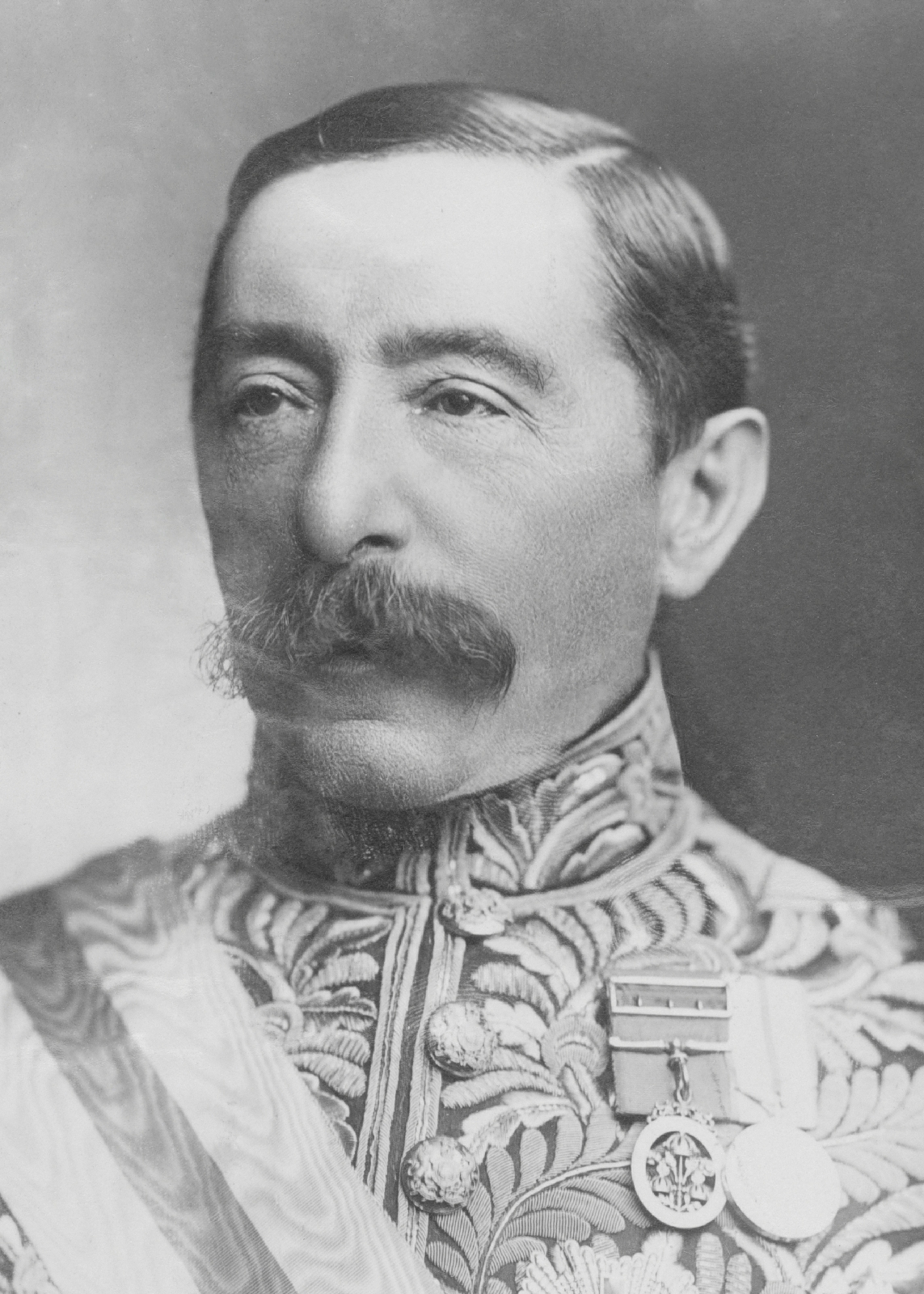
Baron Northcote of Exeter (1846-1911), governor-general of the Australian commonwealth, born on 18 Nov. 1846 at 13 Devonshire St.,Portland Place, London, was second son of Sir Stafford Henry Northcote, first earl of Iddesleigh [q.v.] ; his mother was Cecilia Frances, daughter of Thomas Farrer, and sister of Thomas Farrer, first Lord Farrer. He went to Eton in 1858 and Merton College, Oxford, in 1865, graduating B.A.in 1869 and proceeding M.A. in 1873. On leaving Oxford he was appointed to a clerkship in the foreign office on 18 March 1868. In Feb. 1871 he was attached to the joint high commission, of which his father was one of the members and which sat at Washington from Feb. to May 1871, to consider the Alabama claims and other outstanding questions between Great Britain and the United States. The negotiation having residted in the Treaty of Washington of 8 May 1871, he became secretary to the British member of the claims commission which was constituted under the 12th ar...

KING JOHN AND THE ABBOT OF CANTERBURY

Image
In King John’s reign the Abbot of Canterbury was so rich and grand that the king became  jealous, and sent for the Abbot to reproach him. The Abbot claimed that he was only  spending what had been given in pious gifts to the Abbey. But the king replied that  everything in the kingdom belonged to the king. However, he promised to spare the  Abbot’s life if he could answer three questions. These were: “Where is the centre of the  world?”, “How soon can I ride round the world?” and “What do I think?”  He gave the Abbot a week to find the answers, and the Abbot was in despair for he  thought the questions unanswerable. No learned man in Oxford could help him, and he  returned to Canterbury to say farewell to his monks. On the way he met his shepherd,  who at once offered to take the Abbot’s place, for a fool could sometimes succeed where  a wise man could not. The Abbot at last gave an unwilling consent, a...

STUBBE, JOHN

Image
STUBBE, JOHN (1543?–1591), puritan zealot, born about 1543 in Norfolk, was son of John Stubbe, a country gentleman of Buxton, Norfolk, by his wife Elizabeth. A sister was wife of Thomas Cartwright the puritan [q. v.] John matriculated at Cambridge as a pensioner of Trinity College on 12 Nov. 1555, and graduated B.A. early in 1561. Although he studied law at Lincoln's Inn, he chiefly resided in Norfolk, and made his home in the manor-house of Thelveton, which he inherited from his father, together with other estates at Buxton and elsewhere in the county. An ardent puritan of some learning and literary taste, he in 1574 seems to have published a translation of the ‘Lives of the Archbishops of Canterbury’ which John Joscelyn [q. v.], Archbishop Parker's secretary, had drawn up in Latin, and incorporated in the archbishop's ‘De Antiquitate Britannicæ Ecclesiæ’ (1572). Subsequently Stubbe developed a fiery zeal against catholicism which led him into a dangerous situa...

ALBINUS (d. 732)

Image
Photo : Great Gate of St. Augustine's Abbey, taken Sep 2002 abbot of the monastery of St. Peter's, Canterbury, better known as the monastery of St. Augustine. He assisted Bede in the compilation of his ‘Historia Ecclesiastica,’ and what we know concerning him is chiefly derived from the dedicatory epistle at the beginning of that ​work. Albinus was a pupil of Archbishop Theodore and his coadjutor Adrian, abbot of St. Peter's. Through the instructions of the latter he became not only versed in the scripture's, but likewise a master of Greek and Latin (Chron. G. Thorne). On the death of Adrian, Albinus succeeded to the abbacy, being the first native Englishman who filled that post. Bede in his epistle says that he was indebted to Albinus for all the facts contained in his history relating to the Kentish church between the first conversion of the English and the time at which he was writing. Much of this information was collected by the presbyter Nothelm, who, ...

William Peytow

Image
PETO, WILLIAM (d. 1558), cardinal, whose name is variously written Petow, Peytow, and Peytoo (the last form used by himself), was a man of good family (Harpsfield, Pretended Divorce of Henry VIII, p. 202, Camden Soc.; Holinshed, Chronicle, iii. 1168, ed. 1587). De Thou and others say he was of obscure parentage, simply because his parents are unknown—a fact for which one writer likens him to Melchizedek. Holinshed and some others call his christian name Peter, apparently by a sort of confusion with his surname. He was related to the Throgmortons of Warwickshire, or at least to Michael Throgmorton, a faithful attendant of Cardinal Pole, brother of Sir George Throgmorton of Coughton. As he seems to have been very old when he died, his birth must be referred to the fifteenth century. He was confessor to the Princess Mary, Henry VIII's daughter, in her early years (Cal. State Papers, Venetian, vi. 239). At the time when he first became conspicuous he was provincial of the G...