Posts

Seamus Heaney

Image
By:Rand Brandes In a 1989 interview on the British Desert Island Disc radio program, Seamus Heaney says that although he grew up in South County Derry as a member of the Catholic minority in Northern Ireland, he never personally felt the physical brunt of sectarianism. Aware of the cultural differences dividing the province, he felt his home was ‘‘secure’’ and devoid of what he calls ‘‘sectarian energy.’’ One source of this freedom was what he describes as the ‘‘aristocratic’’ demeanor of his farmer father, Patrick Heaney, who also dealt in cattle. Another source of security was the unusual attention his mother, Margaret, was able to give him and his eight younger brothers and sisters as a result of his live-in aunt Mary’s help with the farm. Seamus Justin Heaney was born on April 13, 1939; he spent his first twelve years growing up on the family farm, Mossbawn, situated near the Moyola River and the town of Castledawson, approximately thirty-five miles northwest of Belfast...

Sausage

Image
Cumberland sausage credit DK Images sausage, food consisting of finely chopped meat mixed with seasonings and, often, other ingredients, all encased in a thin membrane. Although sausages were made by the ancient Greeks and Romans, they were usually plain and unspiced; in the Middle Ages people began to use the various spices and meats that led to the modern sausage. Many of the sausages that became famous were named for the localities where they were first made: the frankfurter in Frankfurt, Germany; the bologna in Bologna, Italy; the genoa salami in Genoa, Italy. Black pudding, an ancient dish in England and Scotland, was made of oatmeal, suet, and hog's blood. White pudding was suet with toasted oatmeal. Sausages are of two types, dry and wet, according to whether the casing is filled with fresh (wet) or cooked (dry) meat. Pork sausage is an example of the wet. Dry sausages are made from fresh meats and curing substances, and then smoked (e.g., pepperoni). Salami, mos...

House of Neville

Image
Neville, or Nevill, the family name of a famous English noble house, descended from Dolfin son of Uchtred, who had a grant from the prior of Durham in 1131 of "Staindropshire," co. Durham, a territory which remained in the hands of his descendants for over four centuries, and in which stood Raby castle, their chief seat. His grandson, Robert, son of Meldred, married the heiress of Geoffrey de Neville (d. 1192-1193), who inherited from her mother the Bulmer lordship of Brancepeth near Durham. Henceforth Brancepeth castle became the other seat of the house, of which the bull's head crest commemorates the Bulmers; but it adopted the Norman surname of Neville (Neuville). Robert's grandson, another Robert, (d. 1282) held high position in Northumbria, and sided with Henry III in the Barons' War, as did his younger brother Geoffrey (d. 1285), ancestor of the Nevills of Hornby. This Robert's son Robert (d. 1271) extended the great possessions of the family...

THE LOSS OF GUIENNE: The End of the Hundred Years' War]

Image
The fate of Guienne was at this moment in the balance. In 1451 Charles VII had turned his victorious arms from Normandy to the south. The Bastard of Orleans had captured one after another the outlying bulwarks of Bordeaux; Bourg and Blaye had fallen in May, Fronsac and Libourne early in June. No succours arrived from England, where the parliamentary struggle of 1451 was then at its height, and on June 30 the inhabitants of Bordeaux, with manifest reluctance, surrendered their city. On August 20 Bayonne, the last fortress where the English banner flew, had opened its gates, and the subjection of Guienne seemed complete. "But provincial independence was dear to the Guiennois; they were loyal in their hearts to Henry VI, and they chafed bitterly against the new taxes and the abrogation of old customs which the French conquest brought about. Within six months of the fall of Bayonne Gascon nobles and burghers were visiting London in secret, to pledge their faith that th...

Portraits of Queen Elizabeth I

Image
Queen Elizabeth with a Fan, 17th c. Artist Unknown. Richmond Town Hall. Queen Elizabeth riding the chariot of Fame. Sir William Teshe, 1570. BL Sloane MS 1832. "The Pelican Portrait", c. 1575. Attr. to Nicholas Hilliard. © Walker Art Gallery, Liverpool Museums. "The Phoenix Portrait", c. 1575. Attr. to Nicholas Hilliard. © National Portrait Gallery, London.

Henry Stafford Northcote, 1st Baron Northcote

Image
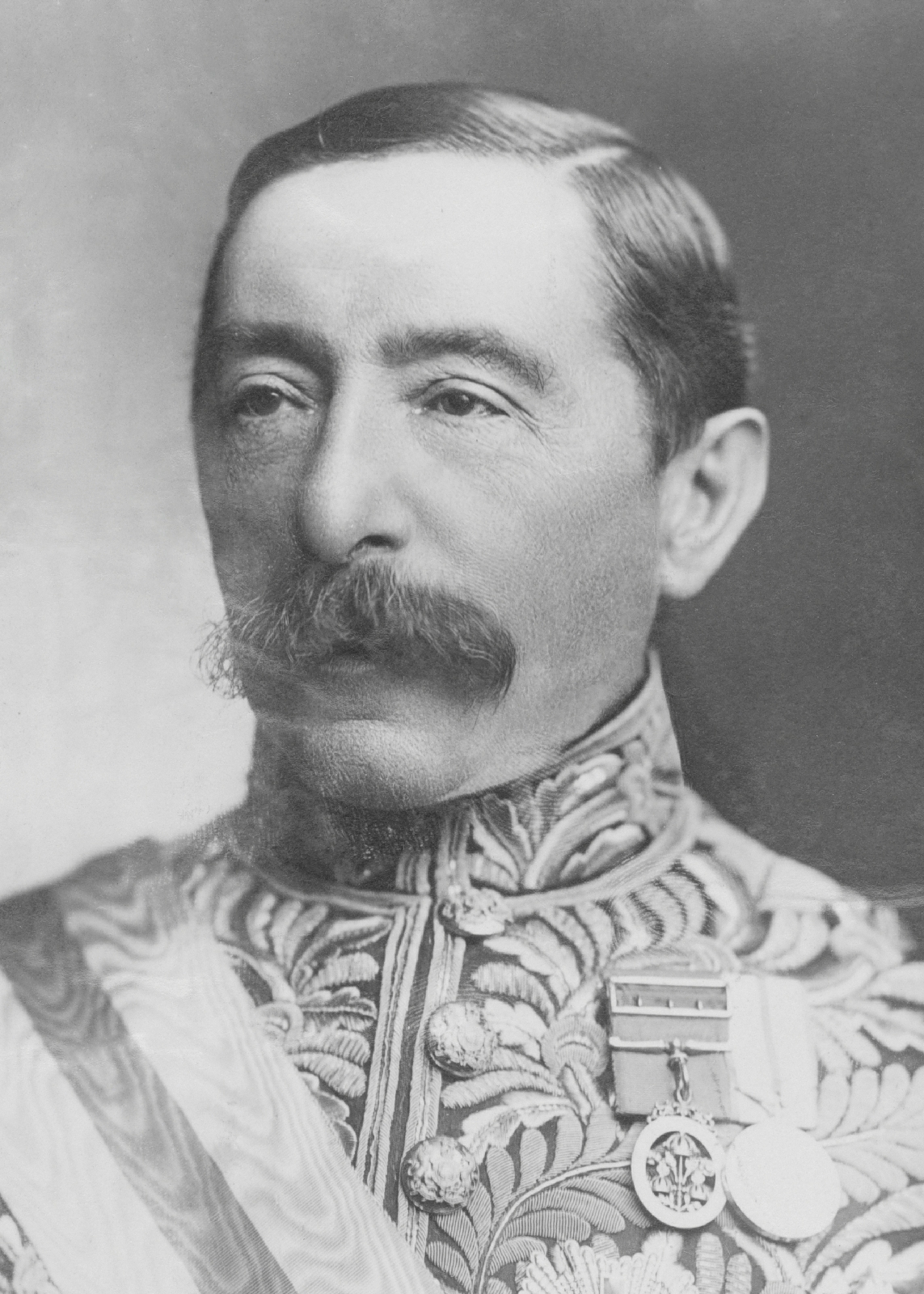
Baron Northcote of Exeter (1846-1911), governor-general of the Australian commonwealth, born on 18 Nov. 1846 at 13 Devonshire St.,Portland Place, London, was second son of Sir Stafford Henry Northcote, first earl of Iddesleigh [q.v.] ; his mother was Cecilia Frances, daughter of Thomas Farrer, and sister of Thomas Farrer, first Lord Farrer. He went to Eton in 1858 and Merton College, Oxford, in 1865, graduating B.A.in 1869 and proceeding M.A. in 1873. On leaving Oxford he was appointed to a clerkship in the foreign office on 18 March 1868. In Feb. 1871 he was attached to the joint high commission, of which his father was one of the members and which sat at Washington from Feb. to May 1871, to consider the Alabama claims and other outstanding questions between Great Britain and the United States. The negotiation having residted in the Treaty of Washington of 8 May 1871, he became secretary to the British member of the claims commission which was constituted under the 12th ar...

KING JOHN AND THE ABBOT OF CANTERBURY

Image
In King John’s reign the Abbot of Canterbury was so rich and grand that the king became  jealous, and sent for the Abbot to reproach him. The Abbot claimed that he was only  spending what had been given in pious gifts to the Abbey. But the king replied that  everything in the kingdom belonged to the king. However, he promised to spare the  Abbot’s life if he could answer three questions. These were: “Where is the centre of the  world?”, “How soon can I ride round the world?” and “What do I think?”  He gave the Abbot a week to find the answers, and the Abbot was in despair for he  thought the questions unanswerable. No learned man in Oxford could help him, and he  returned to Canterbury to say farewell to his monks. On the way he met his shepherd,  who at once offered to take the Abbot’s place, for a fool could sometimes succeed where  a wise man could not. The Abbot at last gave an unwilling consent, a...